
Why Per-Agent Costing Is the Missing Piece in AI Ops
Per-agent cost attribution fills the visibility gap in AI Ops, enabling teams to control spend, optimize models, and prevent runaway bills with real-time observability and automated enforcement.
The blind spot: why traditional billing obscures agent-level spend
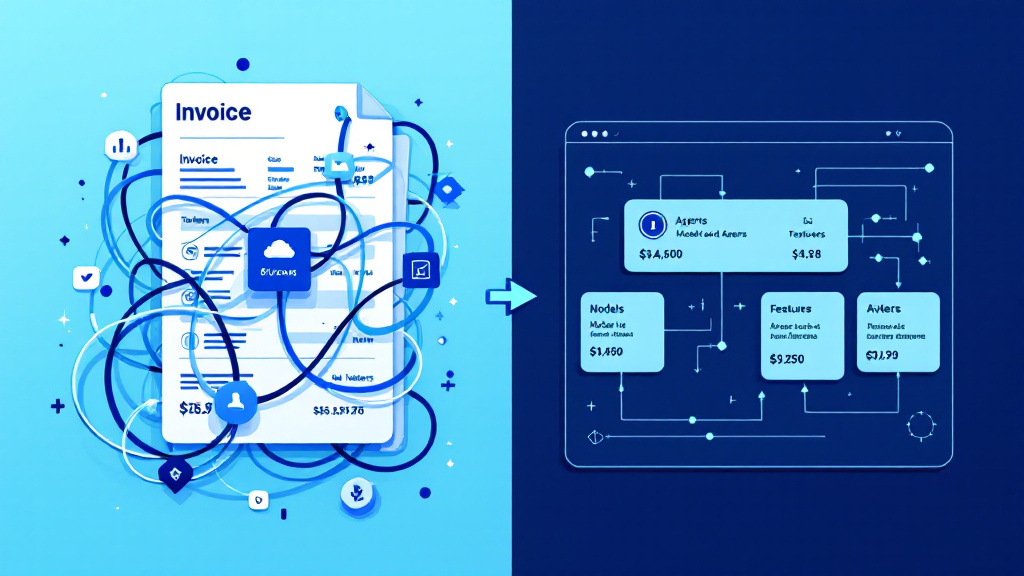
Cloud invoices and model provider bills give a macro view of compute, tokens, and API usage, but they collapse activity across agents, features, and requests into line items that mean little to product and engineering teams. That lack of granularity makes it hard to answer simple operational questions: which conversational agent drove the spike last Friday? Which feature doubled token usage after a deploy? Without per-agent costing and observability, finance owners see surprise invoices while engineers chase ghosts in logs. For AI teams at startups and SMBs, this unpredictability translates directly into missed optimization opportunities and budget overruns.
Per-agent cost attribution transforms billing from a bookkeeping problem into an actionable dataset. By mapping API calls, token counts, and runtime to named agents and features, teams can correlate spend with behavior—deployment changes, dataset shifts, or traffic anomalies. This visibility lets ML teams prioritize model optimization where it matters, lets product managers make tradeoffs informed by cost, and lets finance forecast and enforce budgets. In short, per-agent costing closes the gap between raw invoices and operational decision-making in finops and mlops workflows.
How to attribute costs: patterns, tradeoffs, and instrumentation choices
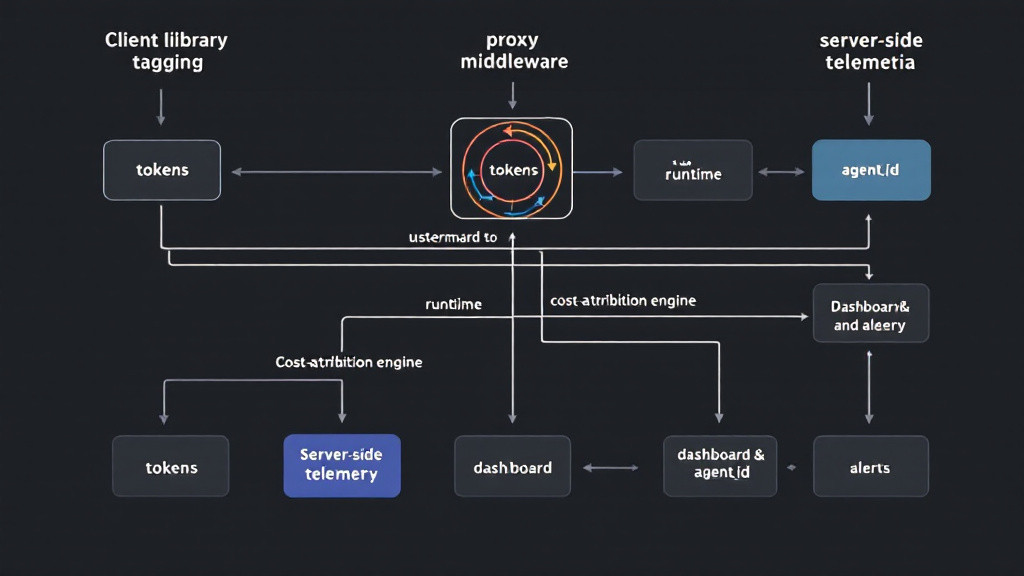
Attributing costs to agents and features requires capturing metadata at call time and joining it with billing and telemetry. Common patterns include lightweight client libraries that tag requests with agent and feature identifiers, proxy middleware that intercepts API calls for providers like OpenAI, and server-side instrumentation that correlates runtime metrics with orchestration logs. Each approach has tradeoffs: client libraries are easy to adopt but rely on consistent developer usage; proxies offer uniform coverage without code changes but add network hops; server-side integrations provide deep context but can be complex to maintain. For many teams, a hybrid approach—client tagging plus a proxy fallback—balances coverage and operational friction.
Beyond capture, the pipeline requires reliable joins to model provider usage and cloud billing APIs, plus real-time stream processing for dashboards and alerts. Observability-grade telemetry (traces, metrics, logs) enriches attribution, enabling drill-downs by user, environment, and request. Instrumentation choices also affect latency, privacy, and cost: lightweight clients minimize overhead, while richer telemetry increases storage and processing needs. Thinking through these tradeoffs upfront helps ML teams implement cost-attribution that is accurate, low-friction, and actionable for finops and mlops goals.
What visibility enables: actions, enforcement, and prioritization
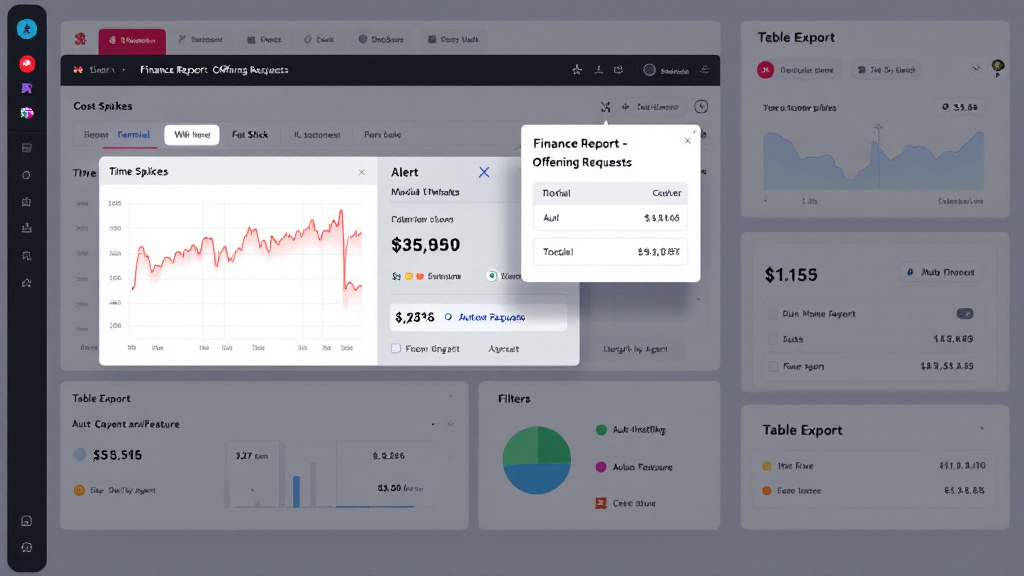
Once teams see costs by agent, the operational and financial effects are immediate. Real-time dashboards and alerts let you detect runaway jobs and cost spikes the moment they occur. Automated budget enforcement can throttle or pause high-cost agents, post incident details to Slack, and produce finance-ready CSVs listing offending requests for chargeback or optimization. Those controls turn finops from a post-mortem exercise into a live control loop that prevents surprises and reduces wasted spend.
Visibility also reshapes prioritization: model optimization and architectural changes are evaluated not just on accuracy or latency but on cost-per-query and ROI. Product managers can decide to gate expensive features behind premium tiers, and engineers can focus profiling on the agents that drive the most spend. For ML teams and finance owners, per-agent costing makes AI spending predictable and strategically manageable—an essential capability for any organization pursuing ambitious AI projects and moonshot-level scale.